


How Much Does Instagram Advertising Cost: Prices for Targeted Ads and Influencer Advertising

Instagram advertising does not have a single fixed rate. Two businesses can show ads to similar users and still get completely different costs per click, lead, and sale. The result depends on the campaign objective, niche, competition, geography, creatives, landing page, and how precisely the audience is defined. Therefore, costs should be calculated for a specific business goal rather than based on a universal price list.
In 2026, the main paid options are official advertising through Meta Ads and integrations with content creators. For a local business, online store, or service company, Instagram remains a platform where advertising can generate traffic, leads, and sales. Instagram uses Stories, Reels, feed ads, post promotion, and retargeting. Targeted advertising gives more control over impressions, while an influencer can help build trust in a product more quickly.
Let us look at how much Instagram advertising costs, what the budget consists of, and which metrics should actually be taken into account when planning a campaign.
How Much Does Instagram Advertising Cost in 2026?
Meta does not have a fixed price list: ads are distributed through an advertising auction. Therefore, any average figures should be treated as benchmarks.
According to Hootsuite, the global average Instagram Ads metrics in 2026 are about $1.31 per click (CPC), $15.26 per 1,000 impressions (CPM), and $11.31 per lead (CPL). However, the actual results for a specific business can differ significantly depending on the market, niche, and campaign settings.
| Format or metric | Benchmark |
| Small test budget | about $10–15 per day |
| Average global CPC | about $1.31 |
| Average global CPM | about $15.26 |
| Average global CPL | about $11.31 |
| Nano-influencer, 1–10K followers | $25–150 per post |
| Micro-influencer, 10–100K followers | $250–5,000 per post |
| Mid-tier influencer, 100–500K followers | $1,600–10,000 per post |
| Macro-influencer, 500K–1M followers | $5,000–25,000 per post |
| Mega-influencer, over 1M followers | $10,000–50,000+ per post |
Influencer ranges are based on aggregated market estimates for 2026. Shopify also emphasizes that follower count is only one factor: rates are affected by engagement, the value of the audience to the advertiser, niche, content production, rights for further use of the content, and exclusivity.
For Ukraine, Meta Ads metrics may differ from global averages. Therefore, the average cost of Instagram advertising is more useful for initial planning than for an exact forecast.
In addition, it is worth separating three categories of expenses:
- money paid to Meta for impressions and clicks;
- fees for a specialist or agency;
- production of banners, videos, and other content.
Advertising can be inexpensive in terms of CPC but costly in terms of customer acquisition. That is why businesses should focus not only on the cost of a click but also on the economics of the entire funnel.
What Determines the Cost of Instagram Advertising?
Even within a single advertising account, costs constantly change. Today, ads may generate inexpensive clicks, while a few weeks later competition or seasonality may push rates higher.
The result is influenced by:
- campaign objective: reach, traffic, messages, leads, or sales;
- country, region, or specific city;
- size of the audience segment being targeted;
- advertiser competition;
- ad format;
- quality of the offer and creative;
- seasonality;
- ad frequency;
- website or form conversion rate;
- data accumulated by the system.
The audience is especially important. If it is too broad, advertising may spend money on people who have a low probability of purchasing. If the audience is too narrow, the same users begin seeing the ads repeatedly, and effectiveness gradually declines.
Therefore, there is no specific answer to the question “how much should Instagram advertising cost?” without context. For an online store with a high average order value, a $1.50 click may be an excellent result. For a low-cost product, the same figure may sometimes be economically unjustified.
How Much Does Targeted Advertising on Instagram Cost?

Targeted advertising is launched through Meta Ads Manager. The advertiser sets the objective, audience, campaign period, placements, and budget, after which the ads participate in the auction.
For a small test, you can allocate approximately $10–15 per day, but this is not Meta’s official minimum rate. It is a practical range that allows a limited number of hypotheses to be tested. If several audience segments and around a dozen creatives are being tested at the same time, a substantially larger budget is required.
Targeted advertising does not necessarily need to start with a large amount. What matters much more is the relationship between spending and the number of hypotheses being tested.
Cost per Click, 1,000 Impressions, and Target Action
Meta Ads uses several key metrics:
- CPC — cost of one click;
- CPM — cost per 1,000 impressions;
- CTR — percentage of users who clicked the ad;
- CPL — cost of acquiring one lead;
- CPA — cost per target action;
- ROAS — revenue relative to advertising spend.
For example, an ad generates a click for $0.30. At first glance, this looks excellent. But if only one out of every hundred users submits an inquiry, the lead costs about $30.
Another campaign may generate a click for $0.80, but every tenth visitor becomes a lead. In that case, the final cost per inquiry is about $8.
Therefore, a normal cost per click on Instagram cannot be assessed in isolation. Traffic quality and subsequent conversion must also be taken into account.
What Budget Is Needed for Instagram Advertising?
It is better to calculate the budget based on the business goal.
Suppose a company needs to receive 40 inquiries and the acceptable cost per inquiry is $10:
40 × $10 = $400 advertising budget.
If the actual CPL after testing turns out to be $15, obtaining the same 40 leads will require about $600.
When planning a campaign, it is important to focus not on the minimum daily limit but on the amount of data required for proper testing and optimization.
Advertising expenses can conventionally be divided into three stages:
- Testing. Audiences, offers, visuals, and formats are tested.
- Optimization. Weak ads are turned off and the budget is redistributed.
- Scaling. Spending is gradually increased on combinations that demonstrate acceptable returns.
This makes promotion manageable and allows decisions to be based on statistics.
How to Tell When the Budget Is Too Small
A very small budget is not always a problem. However, it becomes a limitation when there is not enough data even to understand the result.
The following signs may indicate this:
- each audience receives too few impressions;
- only a few clicks are generated over several days;
- it is impossible to objectively compare creatives;
- ad sets are constantly started and stopped;
- results change significantly because of one or two leads;
- too many ads are competing for a small volume of traffic.
In this situation, it is better to reduce the number of hypotheses. One simple campaign often provides more useful information than a complex structure in which a minimal budget is spread across many elements.
How Much Does Instagram Ad Setup Cost?
The cost of a specialist’s or agency’s work is not included in the Meta media budget.
Professional setup may include:
- business and competitor analysis;
- demand research;
- target audience segmentation;
- strategy development;
- analytics setup;
- preparation of advertising creatives;
- testing;
- optimization;
- reporting.
For example, our approach at Svitli Agency includes analyzing campaigns, audiences, creatives, and landing pages, working separately with cold, warm, and hot audiences, and finding combinations that generate quality leads and sales. Therefore, the final fee is determined by the complexity of the specific project rather than simply by the number of ads created.
How Much Does Advertising in Instagram Stories, Reels, and Feed Cost?
Stories, Reels, and feed placements do not have separate fixed rates. These placements operate within Meta’s advertising system, and the final costs are determined through the auction.
Meta recommends testing different placements, and Reels are part of the Advantage+ placements system alongside other placements. The company also notes that vertical 9:16 videos with audio and key elements placed within the safe zone can improve campaign performance.
Each format serves a different purpose:
- Stories are convenient for short offers, promotions, and quick actions;
- Reels are effective at attracting attention with dynamic video;
- the feed allows a product to be presented in greater detail;
- carousel ads work well for showcasing a range of products, benefits, or service stages.
Instagram advertising should be distributed among formats based on actual performance. If Reels deliver a lower CPM but feed ads generate more sales with the same spend, it is logical to prioritize the second option.
How Much Does It Cost to Promote a Post on Instagram?
The “Boost” button allows you to quickly advertise an already published post. The user sets the budget and duration independently, so post promotion can start from just a few dollars per day.
This option is convenient for increasing content reach or running a simple test.
However, if a business needs regular leads and sales, Ads Manager usually provides more options: audiences can be selected more precisely, different objectives can be used, retargeting can be configured, and conversions can be analyzed.
Therefore, promoting a single post and running a full targeted advertising campaign are not exactly the same thing.
Meta Ads or Influencer Advertising: Which Should You Choose?
Official advertising and creator integrations serve different purposes.
Meta Ads allows you to:
- control the budget independently;
- select the audience;
- test several variants;
- quickly turn off weak ads;
- run retargeting;
- track conversions.
An integration with a creator works differently. The main asset here is the trust the influencer has already built among their followers.
If the creator’s audience matches the brand’s potential buyers, this type of promotion can generate not only clicks but also additional social capital.
However, predictability is lower. An influencer with a large number of followers will not necessarily generate more orders than a smaller niche account.
Therefore, in many projects it is more effective not to choose between the two channels but to combine them: Meta provides a controlled flow of traffic, while the influencer helps build trust and create additional content.
How Much Does Influencer Advertising on Instagram Cost?

According to Shopify’s current 2026 research, Instagram benchmarks look as follows:
- nano-influencers — $25–150 per post;
- micro — $250–5,000;
- mid-tier — $1,600–10,000;
- macro — $5,000–25,000;
- mega — $10,000–50,000+.
These are very broad ranges. One influencer may quote an amount significantly below or above the market average. Shopify also notes that modern rates are increasingly less dependent solely on follower count: brands evaluate audience quality, engagement, and the value of a particular creator for their niche.
What Determines an Influencer’s Advertising Price?
Before placement, you should check:
- actual reach of Stories and posts;
- Reels views;
- engagement;
- user geography;
- target audience age;
- account topic or niche;
- number of commercial integrations;
- comment quality;
- results of previous placements.
Follower count shows the scale of an account, but not the quality of the connection. Followers may be inactive, located in an unsuitable country, or simply not match the potential customer profile.
That is why an influencer with 20,000 active followers in a narrow niche can sometimes generate more sales for a business than an influencer with 200,000 followers from a broad general audience.
Follower count becomes a useful metric only when considered together with reach and engagement. If the audience trusts the creator and closely matches the product, even a small influencer can deliver strong results.
How Much Do an Influencer Post, Stories, and Reel Cost?
The format also affects the price.
Stories are often cheaper than a full post because the content is available for a limited time. A Reel may cost more because it requires a script, filming, and editing.
Additional charges may apply for:
- several Stories instead of one;
- complex video production;
- reposting;
- exclusivity;
- brand rights to use the content;
- permission to use the video in the brand’s own advertising.
That is why the price per Instagram post does not always make it possible to compare two creators directly. Integration terms can differ significantly.
Before paying, it is advisable to request statistics for recent publications. Follower count without stable reach should not be the main argument when selecting a placement.
Cost of Advertising in Instagram Public Pages
Advertising in thematic public pages is often more affordable than placement with a well-known creator. This format can be especially useful for local businesses: city pages allow advertisers to reach a geographically concentrated audience.
However, follower count alone does not guarantee results here either. It is necessary to look at average reach, user activity, and content quality.
Placement effectiveness should ideally be tracked using a separate UTM link, promo code, or landing page.
How to Calculate the Cost of Instagram Advertising

The most practical approach is to start from the acceptable customer acquisition economics:
Advertising budget = number of required results × acceptable cost per result.
For example, a company is willing to pay no more than $12 per inquiry and wants to receive 50 leads:
50 × $12 = $600.
The next step is to determine the lead-to-sale conversion rate.
Suppose that 10 out of 50 inquiries become customers. In that case, the cost per customer will be $60.
If the profit from a new customer is $200, advertising may be profitable. If the company earns $40 from that customer, the settings, offer, or the funnel itself need to be changed.
Therefore, a correct calculation of Instagram advertising costs should cover the entire customer journey:
impressions → clicks → inquiries → sales → repeat purchases.
Calculation Example for an Online Store
Suppose an online store needs to receive 100 orders per month.
The average order value is $70, and the acceptable acquisition cost for one customer is $10. In that case, the maximum advertising budget for 100 new orders is about $1,000.
If the website converts 3% of visitors into purchases, about 3,330 clicks will be needed to generate 100 orders.
At a CPC of about $0.30:
3,330 × $0.30 ≈ $999.
The economics align almost perfectly.
But if the cost per click rises to $0.60:
3,330 × $0.60 ≈ $1,998.
Advertising now costs almost twice the acceptable level.
This does not mean that the only solution is to search for cheaper traffic. You can improve the conversion rate of product pages, increase the average order value, change the offer, or increase the share of repeat purchases.
This calculation clearly shows why advertising should be evaluated together with the economics of the business.
How to Reduce the Cost of Targeted Advertising
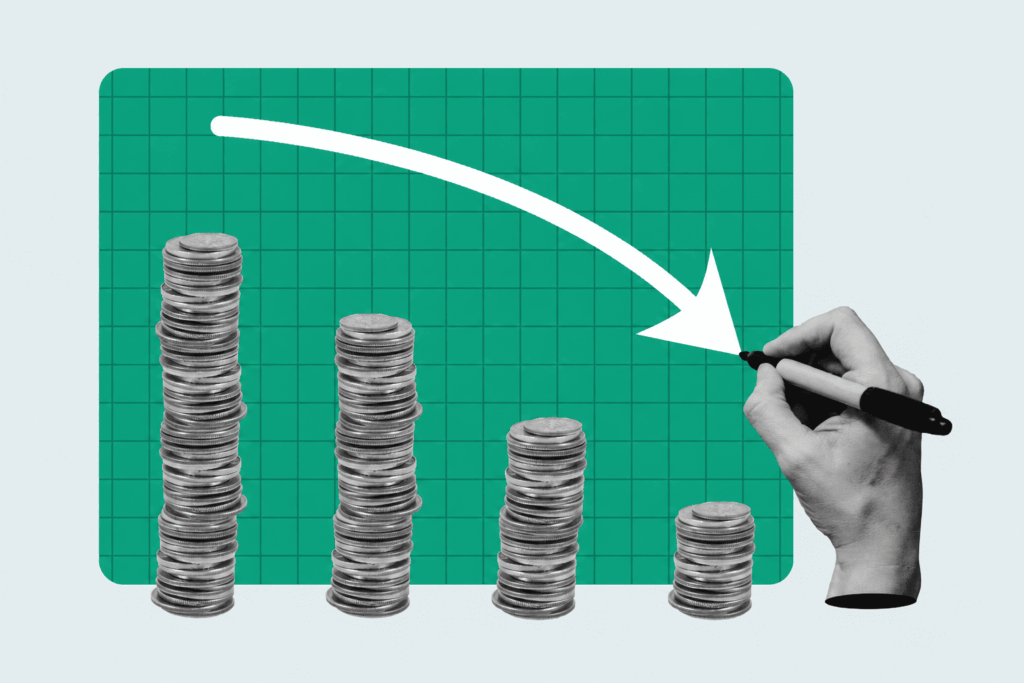
Targeted advertising becomes more effective not by constantly reducing the daily limit, but by improving the entire advertising setup.
To do this, you should:
- test different offers and visuals;
- separate cold and warm audiences;
- use retargeting;
- refresh creatives;
- control ad frequency;
- turn off weak combinations;
- improve landing pages;
- check the mobile version of the website;
- analyze lead quality;
- track sales by source;
- scale only validated hypotheses.
Creative fatigue should also be taken into account. If an audience sees the same ad for a long time, users begin to respond less often, and the cost per result may increase.
At the same time, ads should not be changed after every unsuccessful day. An objective assessment requires enough data to accumulate.
Conclusion
There is no single universal answer to the question “how much does Instagram advertising cost?” A small test may require tens or hundreds of dollars, while a large-scale campaign or placement with a major creator may cost thousands.
It is important to evaluate more than impressions and clicks. For a business, the cost per inquiry, customer acquisition cost, sales conversion rate, and return on investment are more important.
If advertising brings in customers at an acceptable cost and remains profitable as spending increases, the budget can be scaled. In that case, Instagram becomes not just a promotion channel but a predictable source of leads and sales.
Frequently Asked Questions About Instagram Advertising Costs
How much does it cost to launch advertising on Instagram?
There is no fixed amount. For a small test campaign, you can use approximately $5–15 per day as a benchmark. The more segments, products, and creatives that are tested at the same time, the larger the required budget will be.
What is a normal cost per click on Instagram?
According to Hootsuite, the global average CPC in 2026 is about $1.31. However, there is no universal benchmark: in a specific niche, the figure may be significantly lower or higher. It is more important to compare it with conversion into inquiries and sales.
How can I view Instagram advertising costs?
The main metrics are available in Meta Ads Manager: amount spent, impressions, reach, clicks, CPC, CPM, leads, purchases, and other configured events.
Is it worth buying advertising from an influencer?
Yes, if the creator’s audience matches the brand’s potential customers and actual reach can be verified. When choosing an influencer, follower count should be assessed together with engagement and target audience quality.
Which is more profitable: Reels, Stories, or feed ads?
There is no universal answer. Reels are good at attracting attention, Stories work well for quick actions, and the feed makes it possible to present a product in more detail. The best format is determined through testing.
Is there a tax on Instagram advertising in Ukraine?
Ukrainian law provides for 20% VAT on taxable electronic services supplied by registered non-residents to Ukrainian consumers. The State Tax Service lists Meta among the largest foreign payers of this tax in Ukraine. The specific accounting treatment of advertising expenses depends on the advertiser’s tax status, so businesses should take payment profile settings and their accountant’s recommendations into account.

 Kseniya


 Vika
Vika
